
革命
2020年秋に発売された「iPhone 12 Pro」に搭載されたLiDARセンサーにより,3Dスキャン環境に革命が起きました。
それまでは高額で重いスキャン機器や高性能PCが必要だった3Dスキャンが,たった10万円(発売当時)でしかも片手で実現できるようになりました。
当時の3Dスキャン界隈での衝撃は凄まじく,筆者も含めて深夜に雄叫びを上げたことを覚えています。
このiPhone12Proを皮切りに,企業・個人問わずに続々とスキャンアプリやスキャン手法の開発が行われ今日に至ります。
その一方で手軽に3Dスキャンすることができたところで,それをどう利用しよう?といった声もちらほら聞こえます。
このテックブログではそんな大衆化されつつある各3Dスキャン手法の特徴を整理するとともに,作成した3Dモデルの利用方法をまとめていこうと思います。
大衆化したスキャン
軽量で高性能なカメラ・LiDARセンサーを搭載したスマートフォンが市場に出されたことで,各社・各人こぞって3次元構造推定方法やスキャンアプリを開発していきます。
手法や特徴が様々あるため,ここでは各スキャン手法の特徴を示すとともに対応するアプリを紹介していきます。
フォトグラメトリー(写真測量)
大量の画像データを用いて対象物の形状を推定する手法です。
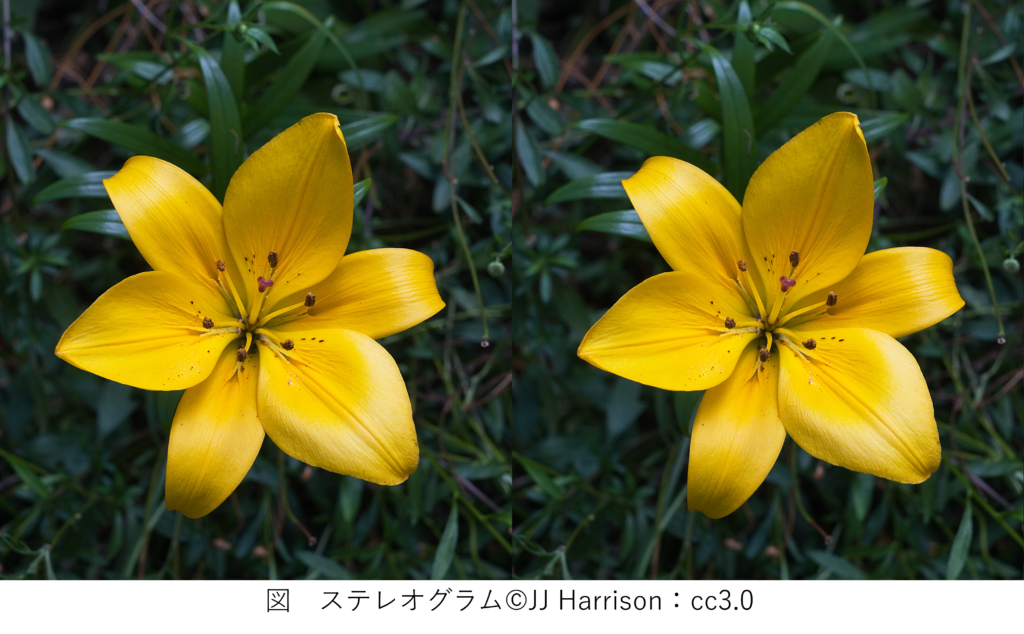
各画像の特徴点を検出し画像間で合致させていくことにより,対象物の形状を把握します。イメージし易い言い方でいえば,両眼視差を利用するステレオグラムをあらゆる方向・角度で行います。
ソフトにもよりますが特徴点による画像間の位置合わせが肝となるので,画像の解像度が物を言います。高解像度であればあるほど,物体に対して正確でシャープなエッジが実現できます。一方で各画像の特徴点を把握して位置推定するため連続したパターンや反射・透過する物体は画像間の位置推定が不安定になるため,良好に形状推定ができません。また基本的にはスケールは後加工で合わせる必要があります。
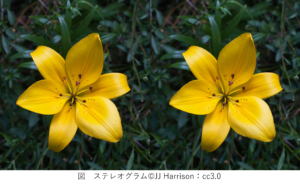
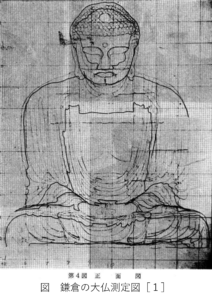
画像があればアナログでも行える技法のため古くは鎌倉の大仏の重量推定などにも用いられたそうです。[1]
おすすめアプリ:RealityScan
RealityScanはUnreal Engineがリリースしているフォトグラメトリアプリです。スキャン精度向上させるサポート機能があったり,プレビュー機能で撮影枚数が足りているか確認できるのがとても良いです。無料で利用できます。
https://www.unrealengine.com/ja/realityscan
LiDARスキャン
iPhoneのPROシリーズに搭載されたLiDARセンサーにより対象物の形状を把握する手法です。
LiDAR(Light Detection and Ranging)とは装置から発射されるレーザー光の反射時間を利用し物体までの距離・方向を測定する方法です。それを連続的に行うことで対象物の3次元形状を推定する手法です。
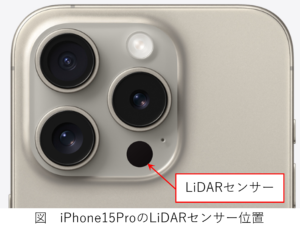
レーザー光により物体までの距離を正確に素早く測定できるため推定時間が短く,精度もよい手法です。またスケーリングもされるため二次利用にも便利です。
弱点としてはフォトグラメトリと同様に物体推定に特徴点も利用するため,反射物・透過物はうまく形状推定できません。また使用するレーザー光の照射距離限界があるため,うまく形状推定できるのは機器から5m程度になります。[4]
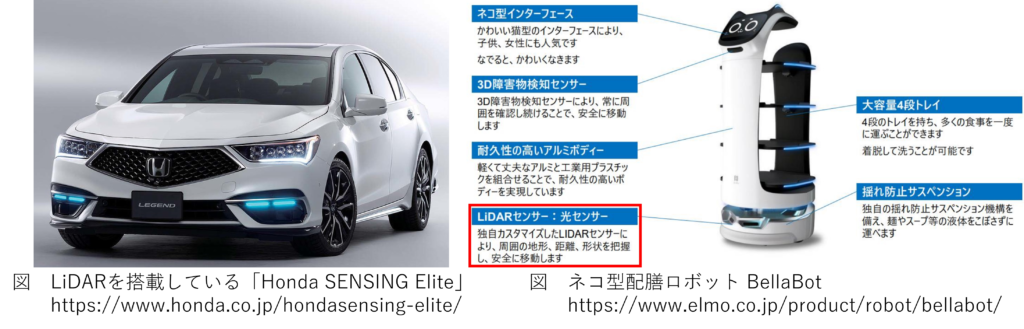
最近では自動運転車にも利用され始めていたり[2],レストランでよく見る猫型ロボットにも搭載されていたりします。[3]
おすすめアプリ:Scaniverse
3Dスキャンを行っている人のスマートフォンにほぼ確実に入っているアプリ(著者調べ)。
基本的にはiOS・アンドロイドどちらでも使えるとても便利な代物です。LiDARがない端末でも使用できるため,皆さんすぐにDLするべきです。もちろんLiDARがあるPro版iPhoneで使用するのが最も精度良く,素早くスキャンできます。
また昨今は後述する「3DGaussianSplatting」にも対応し,オールマイティーなアプルとなりつつあります。
3DGaussianSplatting
3DGaussianと言われる概念を用いて点群を滑らかに表現する手法です。
3DGaussianとは各点の位置,共分散,透明度,視点依存色情報を持つ輪郭が薄い球状の物体として表現されます。点群の作成は前述したフォトグラメトリと同様の手法で行っています。[5]
それらをある面にSplat(グチャッとぶつかって広げる)させることで,ある視点から見た画像を近似します。3次元水彩画みたいなイメージです。
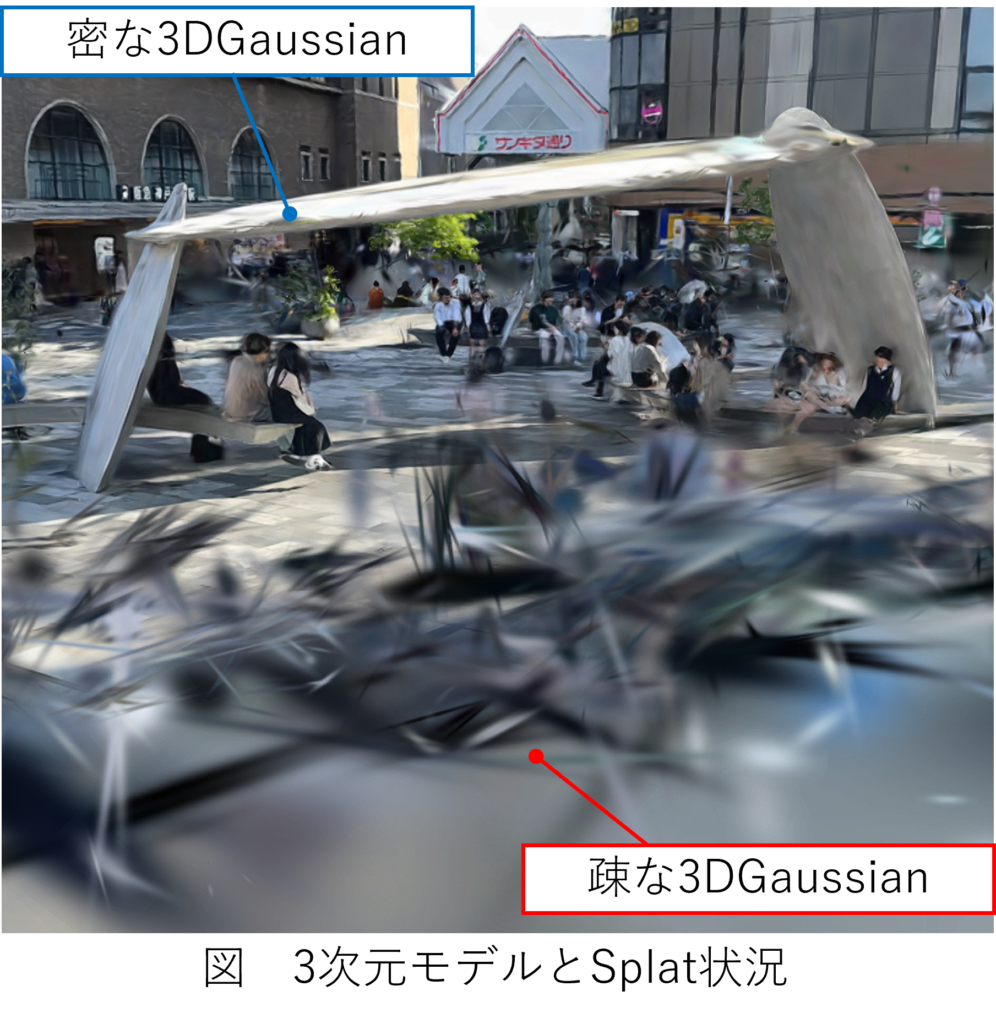
推定された3次元モデルを見るとわかるように,適切な情報があるところはしっかりとした推定がされ,情報が疎な箇所に関しては細長い楕円のような3DGaussianが確認できると思います。
この手法は前述した2手法と異なり,生成された3次元モデルと入力した画像データを同画角で比較します。その差分を目的関数,前述した3DGaussianの各パラメータを変数として差分を最小化する方向で最適化することで3次元モデルの精度を向上させています。
これにより反射する物体・半透明な物体も適切に形状推定してくれるため機械系部品や車などをスキャンする際に重宝します。
おすすめアプリ:LumaAI
LumaAIは3DGaussianSplattingで3次元形状推定を行えるのはもちろんですが,特別な操作をせずともレンダリング映像として出力がされるためSNSなどで共有するのにとても便利です。
またスマートフォンなしでWebサイト上でも写真群・映像を入力すれば形状推定処理ができるため,高画質なカメラを使用することでより精密なモデルを作成することも可能です。
https://lumalabs.ai/interactive-scenes
また話は逸れますが,同社は24年6月12日に動画生成AI「DreamMachine」を発表しました。これらの学習にもLumaAIで作成された3次元モデルが役にたっていると思われます。
手法まとめ
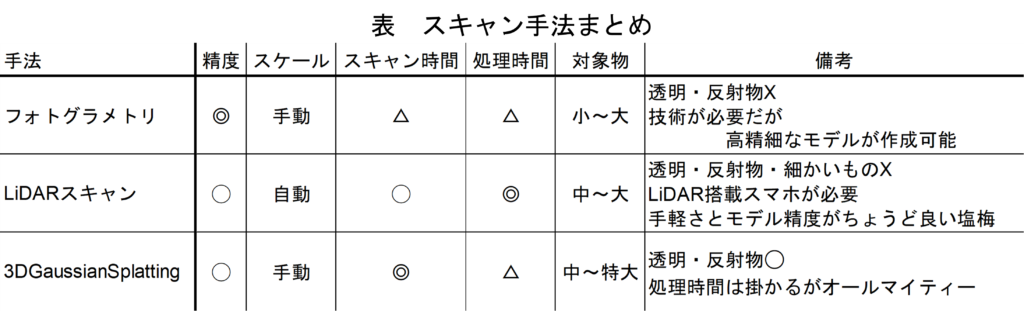
上記3手法をまとめると以下の表のようになります。
スキャン対象の状態によって適切な手法が異なります。一番最初にお試しするのであれば一番手軽で失敗が少ない「3DGaussianSplatting : LumaAI」をおすすめします。
3Dモデルはいずこへ?
さて,スキャンした3Dモデルをどうしましょう。手元のスマートフォンに仕舞っておくにはもったいないです。筆者がおすすめする楽しみ方を紹介します。
手乗りで楽しむ
一番ポピュラーな方法かと思います。
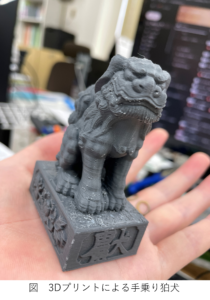
通常の3Dスキャンアプリであれば,後処理と同時に OBJファイルもしくはFBXファイルが出力されるかと思います。それをそのままお手持ちの3Dプリンターで出力すれば,あっという間に手乗り狛犬の完成です。
旅先で見つけた不思議な彫刻などをお手元に置いておくと,旅の記憶が鮮明に蘇っておすすめです。
俯瞰で楽しむ
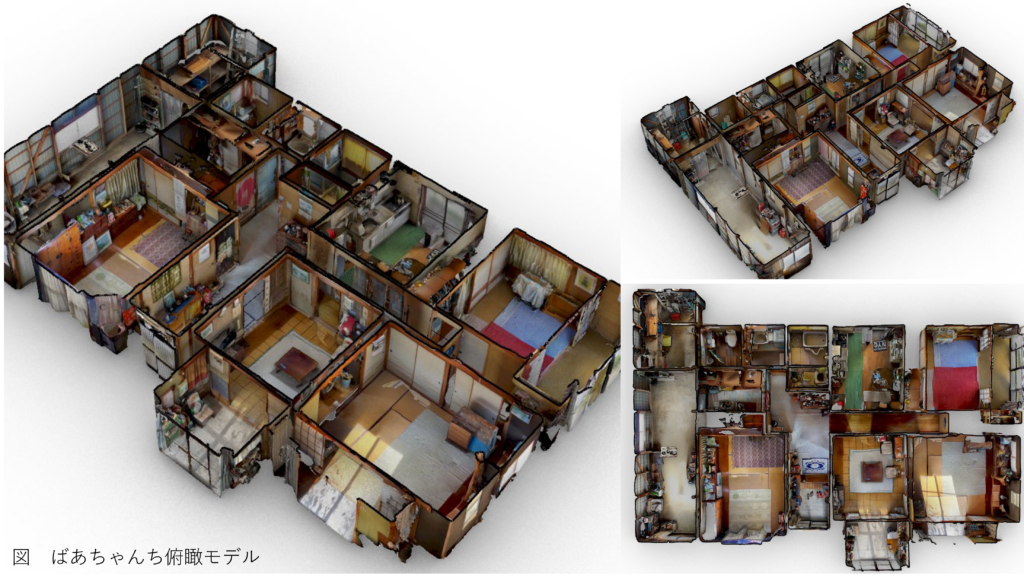
ある程度慣れてくると大きなものもスキャンできるようになってきます。そんなときはモデル同士を合成して俯瞰で楽しみましょう!シルバニアファミリーみたいな感じに。
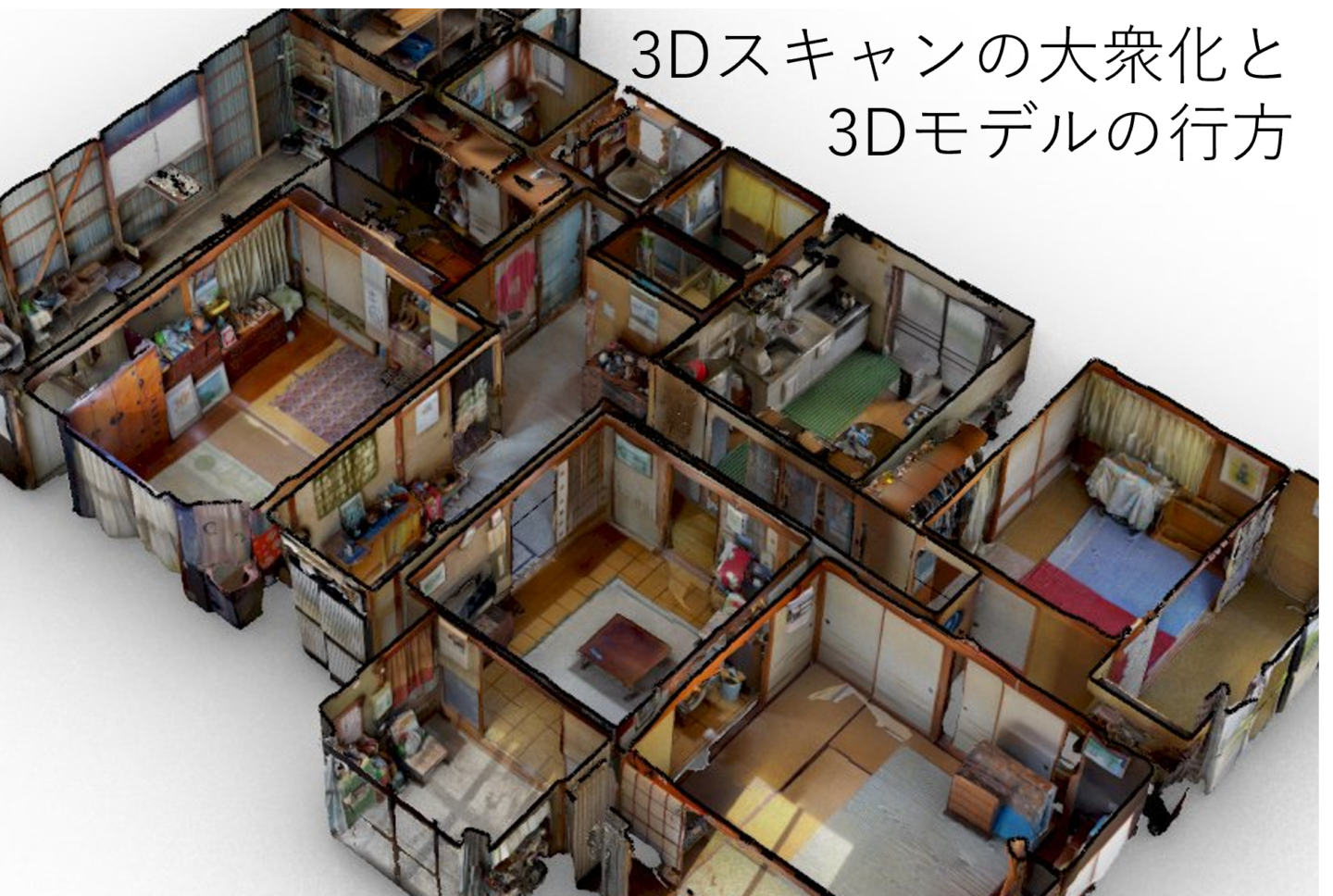
以下は筆者がスキャンしモデリングソフト上で合成した「ばあちゃんち」です。施設に入ってしまい家主が居なくなってしまった家をスキャンし保存しています。
普段の視点では見れない部屋同士の関係や生活をみることができて良いです。
バーチャル空間で楽しむ
俯瞰して楽しんだあと,もっと楽しみたい人はモデルをバーチャル空間に設置しましょう!
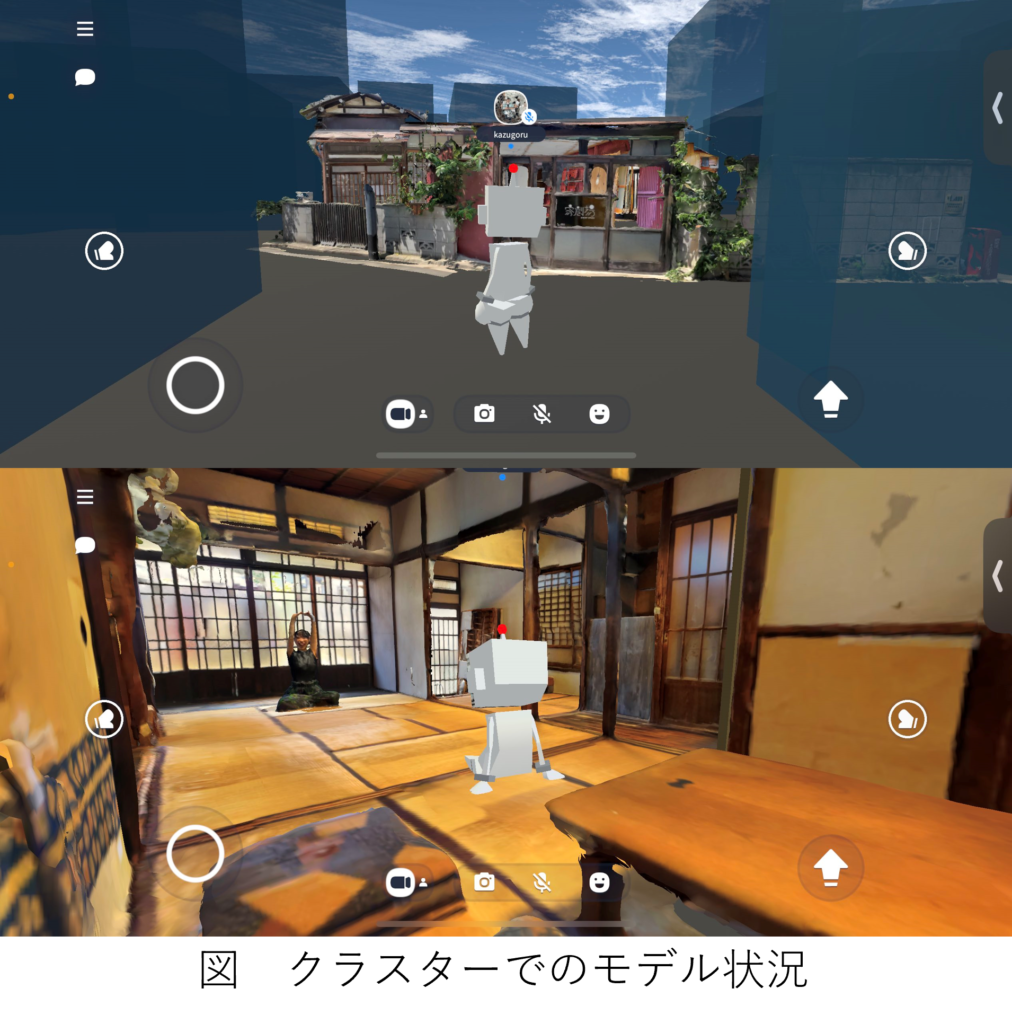
以下は筆者とその仲間たちからなるスキャン集団(通称:スキャンぽ)が都内にあった古民家建築を丸ごとスキャンした後に,clusterと呼ばれるメタバースプラットフォームに設置した例です。
モデル容量削減や衝突処理などに少々ハードルはありますが,スキャンしたあとでもモデルをじっくり見ることができます。モデル内部でイベントも開催できるため,スキャンモデルをあとからじっくり観察する会合を開催可能です!
↓クラスターリンク。アプリDLなど必要ですが,自由に誰でも入ることが可能です。
家劇場 | メタバースプラットフォーム cluster(クラスター)
挙動を見て楽しむ
弊社のテックブログを見てくれている方々においては,そこかしこにある構造物の挙動を見てみたい!という方もいらっしゃるかもしれません。3Dスキャンはそれを可能にしてくれます。
ちょうど手元に札幌市真駒内に存在するモアイをもした不可思議なベンチデータがあったのでこの構造物の挙動観察を行ってみましょう。
様々方法はあるかと思いますがここでは3次元モデリングツール:Rhinocerosでの作業例を示しておきます。
-
スキャンデータは往々にして穴が空いていたりMeshが干渉していたりするので,シュリンクラップでそれらを綺麗にします。これにより切れ目のないMeshデータが得られます。
-
作成されたMeshは細かく・汚い状況なので,QuadRemeshを行いMeshを綺麗にします。その際同時にSubDを作成します。
-
SubDに対してToNURBSを行い対象物をポリサーフェスに変換します。
-
作成されたポリサーフェスをStepファイルにて出力すれば,汎用解析ソフトで使用できるデータが完成します。
以上が一連の流れです。ちなみにシュリンクラップ後のMeshでもToNURBSできるのですが図のように細々としたサーフェスができてしまいます。このようなサーフェスを汎用解析ソフトでメッシュを切ると不具合が生じることが多いため,ここではSubD化後にToNURBSを行っています。

さて皆さんお待ちかねのモアイベンチの挙動を確認してみましょう。
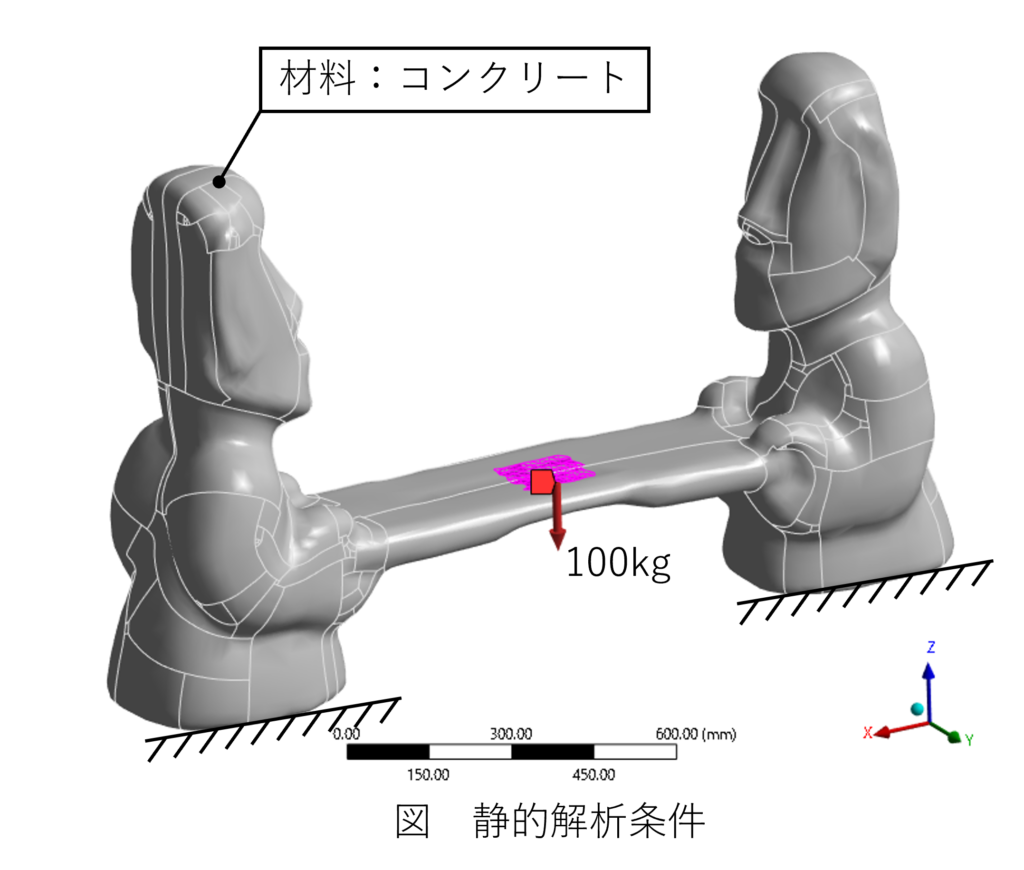
以下に示すのは固有値解析結果です。モアイ脚部は地球に固定し,材料はコンクリート(E=2.1x10⁴N/mm²)としています。
1次モードはモアイが頷くようなモード,2次モードはモアイがルンルン首を振るようなモードのようです。5次にようやく薄いベンチ座面部分が上下に振動するモードが出てきます。モードを探っていくと高次モードにはなりますがモアイが伸び縮みするモードも存在しており興味深いです。
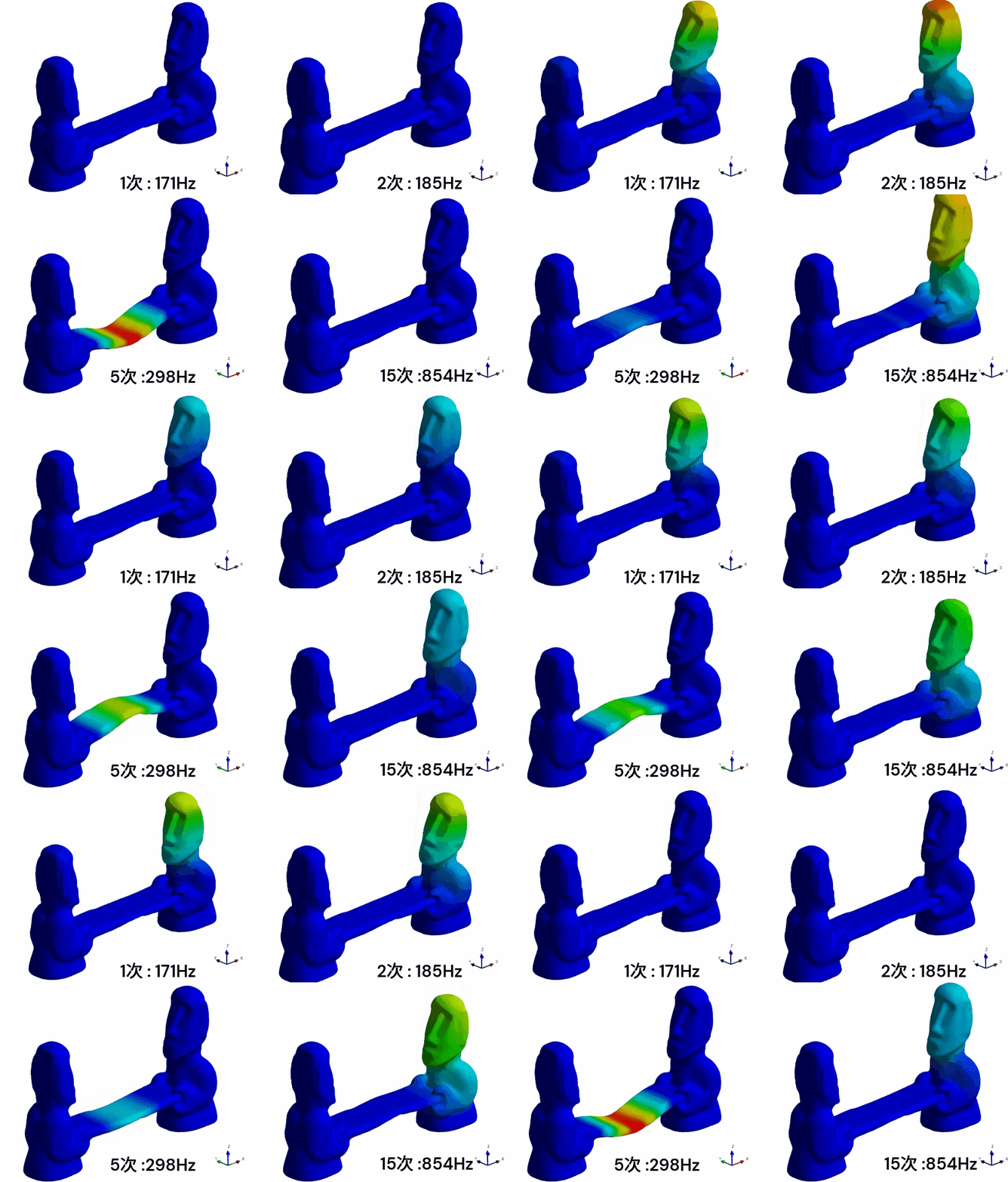
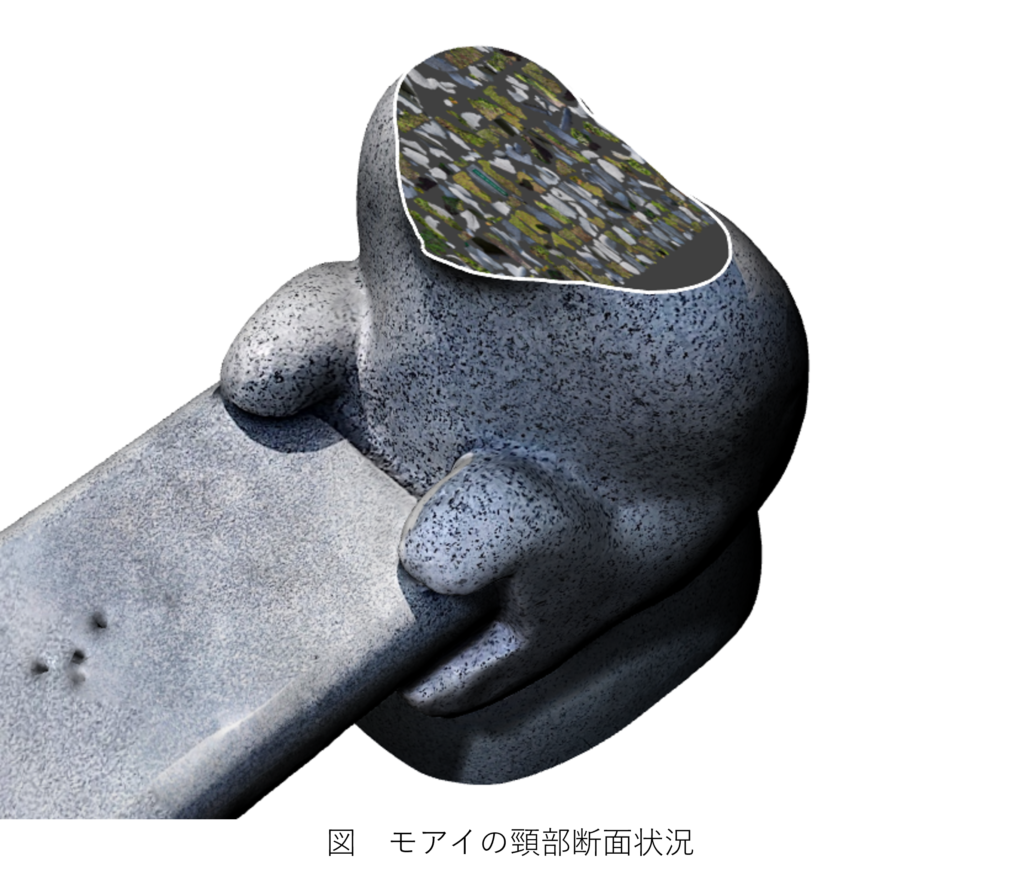
モード形状を踏まえつつモアイ構造を観察していくと,1次モードの起点となっている頸部が扁平となっているようです。方向により断面性能が異なるため,このモアイ像は頷くモードが1次として出ていると思われます。
また本モアイは人が座れるものなので,積載荷重を載荷してどの程度変形するか見てみましょう。境界条件はモアイ底部を地球側に固定し,荷重はベンチ中央部分に計100kgの節点荷重+ベンチ自重を考慮しています。
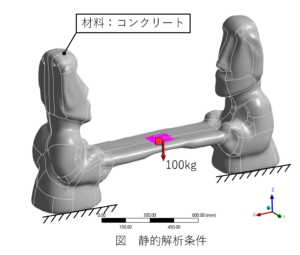
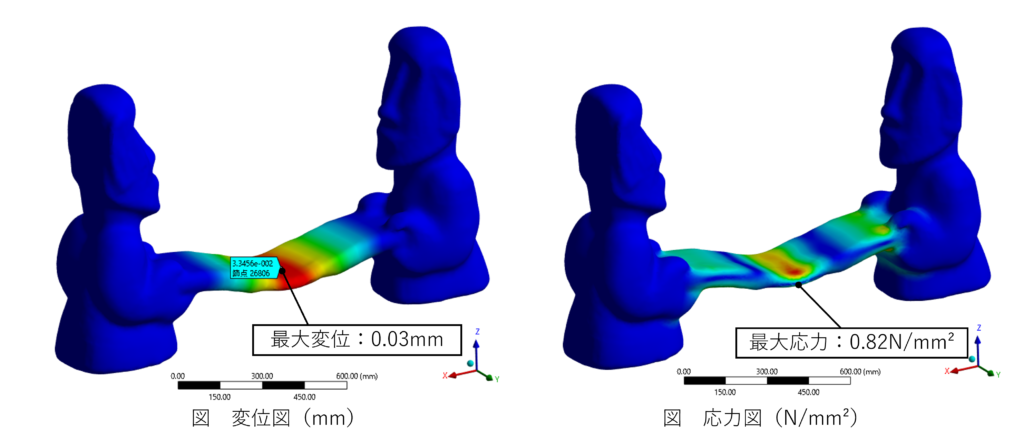
解析最大変位は0.03mmとなりスパン1000mmに対して1/33333<1/300となるので,実用上何ら問題ない範囲で収まっていることが確認できます。また応力を見ても最大引張応力が0.82N/mm²であり,Fc21のコンクリートひび割れ応力2.1N/mm²に対して検定比0.4と十分に余裕を持っていることが分かります。
3Dスキャンに何が可能か
3Dスキャンの現状,楽しみ方をまとめた筆者の趣味全開テックブログはいかがでしたでしょうか?
技術が人々に行き渡り触れる人が増えていくと,当初想定していなかったであろう使用方法が増えることで表現の幅広がり,それに伴い技術進化も更に進んでいくかと思います。
今これを読んでいる方は3Dスキャンを使ってどんなことをしてみたいですか?
その数だけ可能性は広がります。
ぜひお試しあれ!
参考文献
[1]丸安隆和, 大島太市, 薦岡康子, 津田昌明. 「写真測量を利用した三次元の精密測定 : 鎌倉大仏の測定を例にとって(建設特集号)」. 『生産研究』, 第12巻第6号, 1960年6月, 271-275頁. 東京大学生産技術研究所. https://repository.dl.itc.u-tokyo.ac.jp/records/23289
[2]Honda SENSING Elite 特設サイト:https://www.honda.co.jp/hondasensing-elite/
[3]ネコ型配膳ロボット BellaBot:https://www.elmo.co.jp/product/robot/bellabot/
[4]iPhone15Pro:https://www.apple.com/jp/iphone-15-pro/specs/
[5]Kerbl, Bernhard, et al. "3D Gaussian Splatting for Real-Time Radiance Field Rendering." arXiv, 2023, https://arxiv.org/abs/2308.04079.
revolution
The LiDAR sensor in the iPhone 12 Pro, released in the fall of 2020, has revolutionized the 3D scanning environment.
3D scanning, which until then required expensive and heavy scanning equipment and a high-performance PC, could now be done with a single hand and for only 100,000 yen (at the time of its release).
At the time, the impact in the 3D scanning community was tremendous, and I remember the shouts of joy that went up late at night, including the author's. The iPhone12Pro was the first of its kind.
Starting with the iPhone12Pro, scanning applications and scanning methods have been developed one after another by both companies and individuals.
On the other hand, there are those who say, "Now that we can easily scan in 3D, what should we do with it? What to do with it?
In this Tech Blog, I would like to summarize the features of each 3D scanning method that is becoming popular, as well as how to use the 3D models you create.
Popularized scans
As smartphones equipped with lightweight and high-performance cameras and LiDAR sensors hit the market, companies and individuals are developing 3D structure estimation methods and scanning applications.
Since there are various methods and features, this section describes the characteristics of each scanning method and introduces corresponding applications.
Photogrammetry
This method uses a large amount of image data to estimate the shape of an object.
The shape of an object is determined by detecting feature points in each image and matching them with each other. To put it in an easy-to-imagine way, stereograms using binocular disparity are made in all directions and angles.
Depending on the software, the key is to align the images using the feature points, so the resolution of the images is very important. The higher the resolution, the sharper and more accurate the edges of the object. On the other hand, since the position estimation is based on the feature points of each image, continuous patterns or objects that are reflected or transmitted through the image are unstable, making good shape estimation impossible. In addition, the scale must basically be adjusted by post-processing.
This technique, which can be performed even with analog images, was used in the old days to estimate the weight of the Great Buddha in Kamakura, for example.[1]
Recommended App: RealityScan
RealityScan is a photogrammetry application released by Unreal Engine. It has a support function to improve scanning accuracy and a preview function to check if the number of images taken is sufficient. It is available for free.
https://www.unrealengine.com/ja/realityscan
LiDAR Scanning
LiDAR is a method of determining the shape of an object using the LiDAR sensor mounted on the iPhone PRO series.
LiDAR (Light Detection and Ranging) is a method of measuring the distance and direction to an object using the reflection time of laser light emitted from a device. By doing this continuously, it is a method to estimate the 3D shape of an object.
It is a method with short estimation time and good accuracy because the distance to an object can be measured accurately and quickly using laser light. It is also convenient for secondary use because of its scaling.
As with photogrammetry, feature points are also used for object estimation, so reflective and transparent objects cannot be estimated well. Also, because of the limitation of the irradiation distance of the laser beam used, shape estimation can only be successfully performed at a distance of about 5 m from the device. [4] Recently, the shape estimation system has been used for automatic driving vehicles.
Recently, laser beams have begun to be used in self-driving cars, and are also used in cat-shaped robots that are often seen in restaurants.
Recommended App: Scaniverse
This is an application that is almost certain to be found in the smartphones of anyone who does 3D scanning (according to the author's research).
It is basically a very useful tool that can be used on both iOS and Android devices and should be downloaded immediately as it can be used on devices that do not have LiDAR. Of course, using the Pro version of iPhone with LiDAR is the most accurate and quickest way to scan.
It also supports "3DGaussianSplatting" (described later) and is becoming an all-purpose apple.
3DGaussianSplatting
This method uses a concept known as 3DGaussian to smoothly represent point clouds.
3DGaussian is represented as a thin spherical object with a contour that has position, covariance, transparency, and viewpoint-dependent color information for each point. The point cloud is created using the same method as for photogrammetry described above. [5]
By splatting them on a certain surface, an image from a certain viewpoint is approximated, like a 3D watercolor painting.
As you can see from the estimated 3D model, the areas with appropriate information are well estimated, and for areas with sparse information, you can see an elongated ellipse-like 3DGaussian.
Unlike the two methods described above, this method compares the generated 3D model with the input image data at the same angle of view. The accuracy of the 3D model is improved by optimizing the difference in the direction of minimizing the difference using the objective function and the aforementioned 3DGaussian parameters as variables.
This is useful for scanning mechanical parts, cars, etc., because it can appropriately estimate the shape of reflective and semi-transparent objects.
Recommended App: LumaAI
LumaAI is very convenient for sharing on social networking sites, as it can output rendered images without any special operations, in addition to 3D shape estimation using 3DGaussianSplatting.
In addition, since shape estimation can be performed on a website without a smartphone by inputting a group of photos or video images, it is possible to create more precise models by using a high-resolution camera.
https://lumalabs.ai/interactive-scenes
Off topic, but on June 12, 2012, the company announced the "DreamMachine," a video generation AI. The 3D models created by LumaAI are also believed to be useful in the training of these models.
Where are 3D models headed?
What should we do with the scanned 3D model? It would be a waste to keep them in your smartphone. Here are some of the ways the author recommends to enjoy them.
Enjoy a handheld
This is probably the most popular method.
If you use a normal 3D scanning application, it will output an OBJ file or FBX file at the same time as post-processing. If you use your own 3D printer, you can output the OBJ or FBX file as it is, and in no time at all, you will have a hand-held guardian dog.
We recommend that you keep a mysterious sculpture that you found on your travels with you, as it will bring back vivid memories of your travels.
Enjoy a bird's eye view
Once you get used to it to some extent, you will be able to scan large objects. In such a case, you can composite models together and enjoy an overhead view! Like Sylvanian Families.
The following is "Grandma's house" that I scanned and combined on the modeling software. I scanned and saved a house that has gone into an institution and the owner is no longer there.
It is good to see the relationship between rooms and life in the house that cannot be seen from the usual point of view.
Enjoy in virtual space
After enjoying a bird's eye view, those who want to have more fun can install the model in a virtual space!
The following is an example where the author and his friends scanned an entire old private house in Tokyo and installed it on a metaverse platform called cluster.
Although there are a few hurdles to overcome, such as model volume reduction and collision processing, the model can be viewed closely even after it has been scanned. Since events can be held inside the model, it is possible to hold meetings where the scanned model can be closely observed later!
↓Clusterlink. Anyone can freely enter, although you need to download an application.
House Theatre | Metaverse Platform cluster
Enjoy watching it behave.
Some of you who read our Tech Blog may want to see how structures here and there behave! 3D scanning makes it possible.
Since we had at hand the data of a mysterious bench that resembles a moai in Makomanai, Sapporo, let's observe the behavior of this structure.
There are many ways to do this, but here is an example using the 3D modeling tool: Rhinoceros.
(1) Scanning data often contains holes and mesh interference, so shrink-wrap is used to clean up the holes and interference. This process produces mesh data with no gaps.
(2) The created mesh is too small and dirty, so QuadRemesh is used to clean up the mesh. At the same time, SubD is created.
(3) ToNURBS is performed on the SubD to convert the object to a polysurface.
(4) Output the created polysurface as a Step file to complete the data that can be used in general-purpose analysis software.
The above is the sequence of steps. Note that even a shrink-wrapped mesh can be ToNURBSed, but as shown in the figure, a fine surface is created. Since mesh cutting of such surfaces with general-purpose analysis software often results in problems, ToNURBS is performed here after SubD conversion.
Now let's check the behavior of the moai bench that you have all been waiting for.
The following are the results of eigenvalue analysis. The moai legs are fixed to the earth and the material is concrete (E=2.1x10⁴N/mm²).
The first-order mode is like a moai nodding its head, the second-order mode is like a moai shaking its head, and the fifth-order mode is like a thin bench seat part vibrating up and down. It is interesting to note that there is also a mode in which the moai expands and contracts, although it is a higher-order mode.
Observing the moai structure based on the mode shape, it seems that the neck, which is the starting point of the primary mode, is flattened. Since the cross-sectional performance differs depending on the direction, this moai image seems to have a nodding mode as the primary mode.
Since this moai is designed for a person to sit on, let's see how much it deforms when a loaded load is applied. The boundary condition is that the bottom of the moai is fixed to the earth side, and the load is a nodal load of 100 kg in total at the center of the bench plus the bench's own weight.
The maximum analytical displacement is 0.03mm, which is 1/33333 < 1/300 for a span of 1000mm, so it can be confirmed that the displacement is within the range of no practical problem. The maximum tensile stress is 0.82 N/mm², which is 0.4 of the concrete cracking stress of Fc21 (2.1 N/mm²), indicating that there is sufficient margin.
What is possible with 3D scanning
What do you think of this author's hobby-oriented tech blog that summarizes the current state of 3D scanning and how to enjoy it?
As the technology becomes more widely available and more people come into contact with it, it will be used in more ways that were not originally envisioned and will broaden the range of expression.
If you are reading this now, what would you like to do with 3D scanning?
The possibilities are as wide as the number of things you can do with it.
Please give it a try!
Translated with www.DeepL.com/Translator (free version)
References
[1] T. Maruyasu, T. Oshima, Y. Komooka, and M. Tsuda. The three dimensional precision measurement using photogrammetric surveying : An example of the measurement of the Daibutsu statue in Kamakura (special issue on construction). The Journal of Production Research, Vol.12, No.6, June 1960, pp.271-275. Institute of Industrial Science, The University of Tokyo. https://repository.dl.itc.u-tokyo.ac.jp/records/23289
[2] Honda SENSING Elite special site: https://www.honda.co.jp/hondasensing-elite/
[3]Cat-type catering robot BellaBot: https://www.elmo.co.jp/product/robot/bellabot/
[4]iPhone15Pro: https://www.apple.com/jp/iphone-15-pro/specs/
[5]Kerbl, Bernhard, et al. "3D Gaussian Splatting for Real-Time Radiance Field Rendering." arXiv, 2023, https://arxiv.org/abs/2308.04079.
