
Conventional standards
48
Month
Conventional global OEM
Wolfsburg / Tokyo / Detroit
The competitive landscape in automotive development is shifting from simply high individual performance to development processes that can integrate complex requirements and make decisions quickly. Nature Architects explores winning strategies from the upstream stages of vehicle development through Generative Engineering.
The question is,
This is not simply about reducing design man-hours.
In an era of increasingly complex requirements,
No matter how quickly,
Can we reach a sound judgment?.
The complexity of product development has already exceeded a critical point.
Requirements such as NVH (noise, vibration, and harshness), weight reduction, crash safety, and thermal management interfere with each other, making it impossible to reach the optimal solution based solely on conventional experience and intuition.
Wolfsburg / Tokyo / Detroit
BYD, XPeng, Geely, and others
E/E Architecture, January 2026
To be honest, the biggest challenge is ProcessIt's about changing things.
Virtual verification toolThis allowed us to shorten front-end development time without compromising the rigor of verification.
Generative Engineering enables rapid 3D verification from the planning and conceptual design stages of vehicle development, allowing the design space to be learned.
By transitioning to plan-driven development with sufficient information available, we contribute to the innovation of the development process, moving beyond the 18-month era.
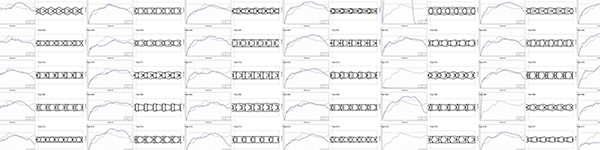
Even before the requirements are finalized, we use 3D to verify multiple options, including vehicle structure, collision, NVH, thermal, and cost, to identify the winning strategy early on.

By connecting Generative Geometry, Generative SimModel, and Generative Awareness, we enable a high-speed cycle from design proposal generation to next-line proposal suggestion.

By reducing uncertainty in the early stages and minimizing rework in the later stages of development, this contributes to improvements in development time, cost, and decision-making speed.
In automotive platform development, crash safety is one of the most critical verification loops.
Generative Engineering allows for 3D verification of a large number of structural hypotheses in the early stages, enabling the identification of "good" concepts before moving on to detailed development.
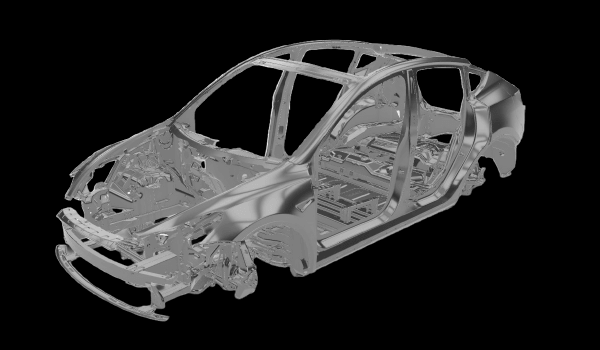
In collision safety design, it is necessary to create structural proposals, build CAE models, set mesh and contact conditions, run analyses, interpret results, and incorporate them into the design. Traditionally, it took at least two weeks to verify one proposal and incorporate the results into the next.
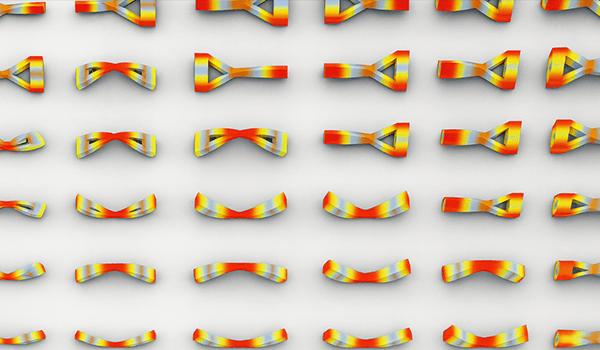
We generate structural candidates using Generative Geometry, convert them into continuously analyzable models using Generative SimModel, and interpret the analysis results using Generative Awareness. This allows us to aim for a verification cycle of approximately 10 candidates per day in the initial stages.
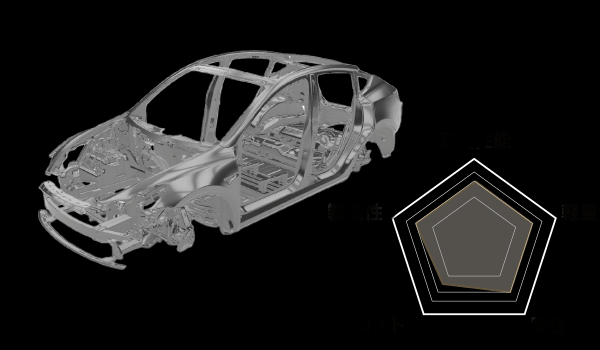
Rather than simply increasing the number of design options, we identify structural concepts that will benefit subsequent processes from the perspectives of load transfer, energy absorption, occupant protection, battery protection, weight reduction, and manufacturability.
Nature Architects accelerates the cycle of generating structural concepts, verifying them in 3D, interpreting the results, and incorporating them into subsequent proposals, right from the early stages of platform development. By finding "good" concepts from a large pool of candidates, it increases the accuracy of decisions before moving into detailed development.
"Nature Architects dramatically accelerates the automotive development process. It transforms design from a process of 'proceeding according to plan' to a process of 'learning and approaching the right solution'."
What will be required in future vehicle development is not just individual technical capabilities. It's how quickly and reliably decisions can be made amidst the interplay of weight reduction, crash safety, NVH, thermal performance, cost, and mass production feasibility. We are shifting development from a plan-driven to a learning-driven approach, creating a state where we can explore, compare, and verify vast design spaces in a short amount of time.